From simulating quantum mechanics to computing with it
About
A path through molecular simulation, open-source infrastructure and practical quantum-computing research.
When I first learned how to simulate the quantum behaviour of molecules, Feynman's idea of using quantum systems themselves to perform computations still sounded to me like science fiction.
Twenty years later, I am sending electronic-structure problems to actual quantum computers.
A foundation in molecular simulation
My journey into the quantum world began at the University of Oulu in Finland, where I learned about ab initio molecular dynamics and Car-Parrinello simulations with Prof. Kari Laasonen. I later had the privilege of learning and doing research with brilliant scientists at the University of the Basque Country, including Prof. Jesús Mari Ugalde, at the University of Jyväskylä in Finland, and at the Bremen Center for Computational Materials Science.
For years, my computers remained classical.
Computing at scale
Then I took a break from academic research and went deeper into computing itself: Linux, distributed systems, infrastructure and cloud technologies. Among other things, I became a core developer of OpenStack, one of the major open-source platforms behind modern cloud infrastructure.
The two paths meet
Eventually, the two paths met.
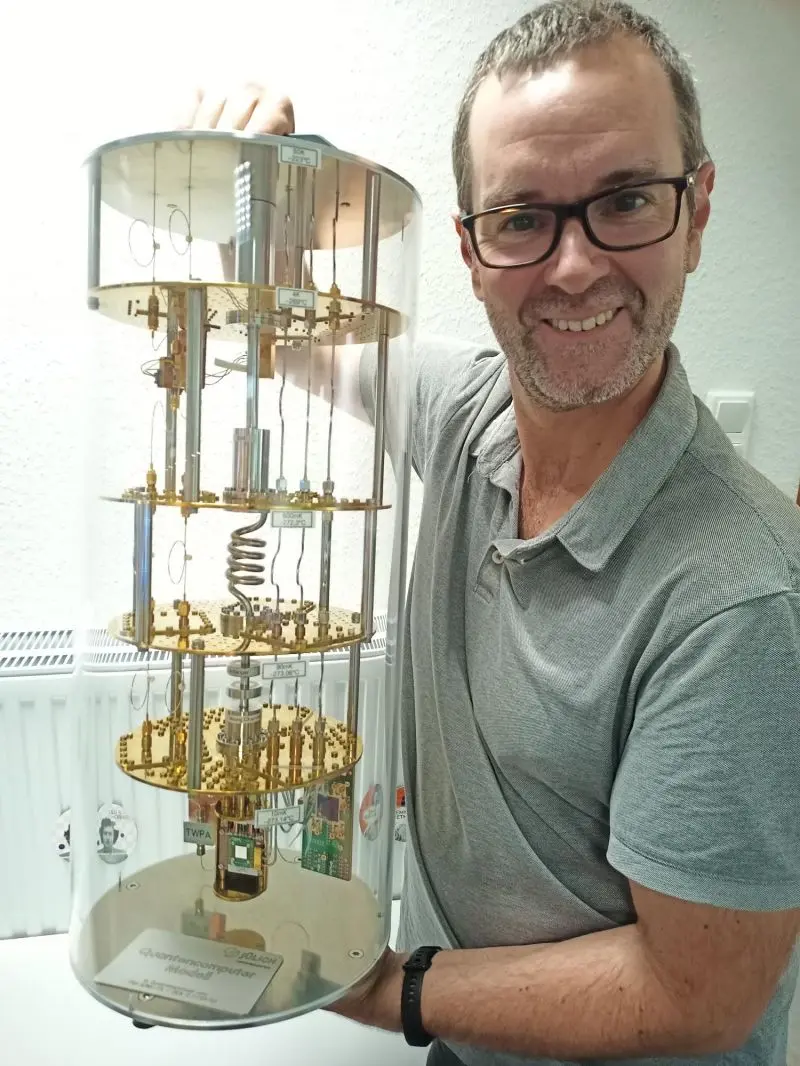
When I discovered that I could apply for access to a real quantum computer through my institution, I could not resist. Molecular quantum mechanics, electronic-structure theory, programming, computing infrastructure and twenty years of accumulated curiosity suddenly belonged to the same problem.
I returned to research.
What I work on now
Today, I work at the intersection of quantum computing, quantum chemistry and electronic-structure calculations. Alongside occasional classical ab initio modelling and other scientific side projects, one of my main goals in quantum technologies is something very practical:
My goal is to make the quantum world a little less mysterious. Quantum computing comes with extraordinary possibilities, but also with complexity, rapidly changing technology and plenty of unrealistic expectations.
I want to help democratize the know-how required to work with it by providing transparent benchmarks, reproducible data and realistic measures of what today's quantum computers can and cannot do.
Perhaps most importantly, I want to document what I learn so that the people coming after me do not have to waste quite as much time discovering it all again.
Current affiliation
Fraunhofer IFAM
Fraunhofer Institute for Manufacturing Technology and Advanced Materials IFAM, Bremen, Germany.
Current research is carried out within the BMFTR-funded EQeS project under contract 13N17338.